Do you also want access to our video library?

  • 2500 videos
  • No binding period
  • Free trial

Welcome to our blog

Yoga, training and health inspiration for you

Explore Ashtanga yoga online with Laruga Glaser

Explore Ashtanga yoga online with Laruga Glaser

04 April 2021 | Av
Laruga Glaser

As a teacher I want to give students the skills to inhabit themselves fully. To make them trust the wisdom that we all have inside of us. Join me on the mat exploring Ashtanga yoga online here at Yogobe.

Ashtanga yoga – a practice where you can explore and grow

I am really passionate about human development, and entering into that new dawn, exploring what the truth is. This has guided me into the practice of yoga, especially Ashtanga yoga. I've been practicing ashtanga yoga for 25 years and I always say that Ashtanga yoga was the best decision I ever made for myself and happy to share with others. Teaching is just an extension of my own practice, my sadhana – that consistant journey of uncovering the truth of who I am. I love to explore the sense of empowerment and connection with all the students that cross my path.

When I am teaching, I'm exploring too and love the sense of giving students the skills and the true beauty of what yoga develops in each human being. I find it to be my duty to give students the skills to make that connection, the skills to inhabit themselves fully, to trust the wisdom that they have inside of them.

One of the true rewards of a longterm yoga practice is to trust that inner guidance and yoga is really about clearing that path. As a teacher I just facilitate that energy. Because everyone has the ability to obtain a connection to that higher self and also to heal old wounds. I try to help to clear that path and to facilitate a space to explore, to learn and also to grow.

I am here to take you through the Ashtanga yoga practice, and I feel it's my purpose to share the development with people who are open to explore the nature of yoga. It will be fun! Expect growth, transformation and to work outside your comfort zone where I will support and guide you along the way.

What is Ashtanga yoga?

For those of you who are new to the embarking of the Ashtanga yoga practice, Ahtanga yoga is a method of practice, with six set sequences. This particular practice was spread throughout the world by the late teacher Sri K. Pattabhi Jois. We memorize this sequence of poses to actually be able to create the sense of moving meditation.

Ashtanga yoga has a way of cultivating strength to the physical body, we become more flexible, we become healthier as well in our physical body. But the beauty of it is that we also become more confident, we feel more centered in ourselves, we obtain and connect to this greater sense of peace within ourselves. It doesn't necessarily mean it will make life easy, but this type of practice gives us the skills to navigate through life more fully.

Learn Ashtanga yoga online with Laruga at Yogobe
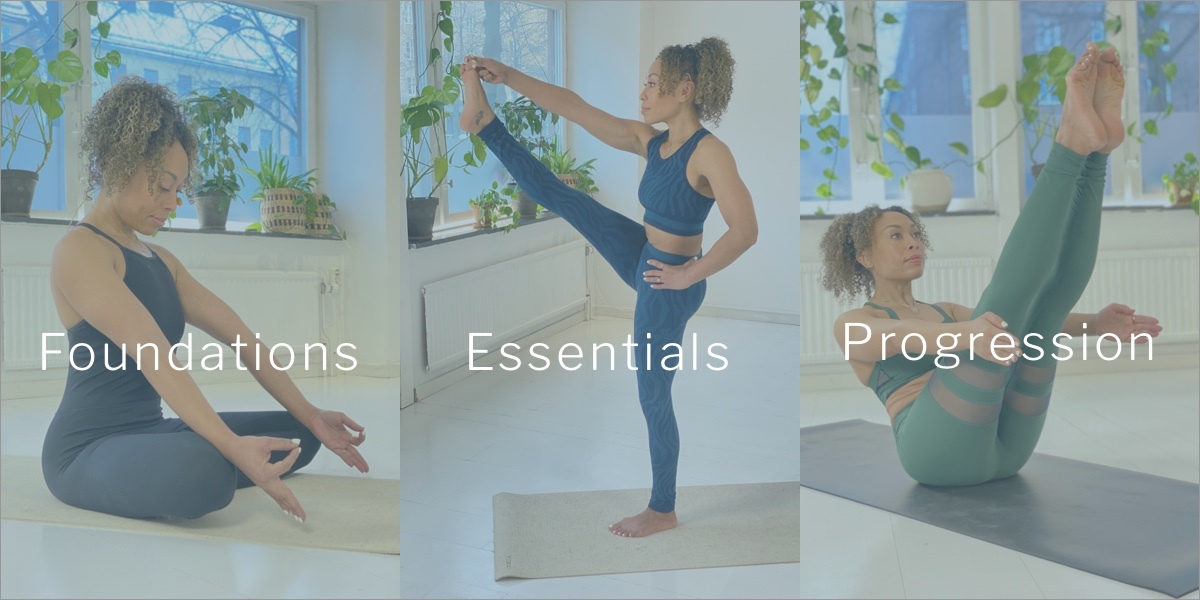

We have created three different playlists that are adapted to different levels of knowledge, which is based on the first series in Ashtanga - Primary Series. Each playlist starts with an introductory workshop and also includes lectures, hands-on classes and tutorial videos.

  • Ashtanga Yoga Foundations – this playlist is for you who is new to ashtanga which will provide you with an introduction to the practice and it's foundations.
  • Ashtanga Yoga Essentials – these classes will deepen your understanding of Ashtanga yoga, working from the inside out.
  • Ashtanga Yoga Progression – Laruga ties everything together and guides you through the full primary series.

Read more about Ashtanga and the good habits of yoga

Video recommendations – Ashtanga yoga online with Laruga Glaser

Yogobe Video: f2z3 Yogobe Video: 4r7f Yogobe Video: b92e Yogobe Video: k8a3

To watch a full video you need to be logged in as a paying Yogobe member. Haven't tried Yogobe before? Try it for free during 14 days – get started here!

Open post
Can mindfulness help the growing brain in children and adolescents?

Can mindfulness help the growing brain in children and adolescents?

24 March 2021 | Av
Yogobe

Mindfulness can help you focus, feel happier and reduce your anxiety. But what does research say about mindfulness for children? And what happens when schools have mindfulness on the schedule? Read more about how mindfulness can help children and young people – while their brains grow.

Mindfulness for children can lay the foundation for good habits

Mindfulness is a meditation technique that is about learning conscious presence, which increases the feeling of calm in both body and mind. Mindfulness is used today in care and psychotherapy to treat various stress symptoms and states of depression, anxiety and worry. Researchers have also shown that the practice of mindfulness and meditation can improve the immune system, lower blood pressure and even change the structure and function of the brain.

Developmental neurologist Hilary A. Marusak of Wayne State University, USA, has been interested in how mindfulness affects the brains of children and adolescents while it is still developing.

– I believe that mindfulness and meditation may be especially beneficial for children and teens because these skills may strengthen brain circuits that control the ability to focus and concentrate and to regulate emotions, which are maturing during this time. Establishing these habits early in life may also set the stage for good habits later in life, says Hilary A. Marusak.

How does mindfulness work?

When you practice mindfulness, you use all five senses: touch, hearing, sight, smell and taste, to focus on the present moment. One of the most common ways to practice mindfulness is to focus on your own breath.

The tendency for the mind to wander, or lose focus on the present, seems to be a standard state of brain function – and can actually be beneficial. The wandering thoughts can, among other things, trigger creativity. But the wandering mind can also go wrong and lead to excessive worry, focus on negative things or dwelling on the past. Research also shows that we are less happy when thoughts and minds wander than we are when we pay attention to the present.

Mindfulness can also help reduce distraction. Being distracted can disrupt children's ability to handle schoolwork, manage relationships with friends or family, or regulate emotions, which is a problem in today's fast-paced world of distractions everywhere.

Effects of mindfulness on the growing brain

Hilary A. Marusak's study examined how mindfulness affects brain connectivity in children and adolescents. The study scanned the brains of 42 children and adolescents between the ages of 7 and 17, using fMRI (Functional Magnetic Resonance Imaging). Participants' degree of "natural awareness", mindfulness as a trait was also measured.

It turns out that children who are more attentive in the present can act more consciously. They also find it easier to observe and accept their inner experiences without judging them. Adolescents with greater attendance reported lower anxiety levels and their brains switched more often between different connectivity states during the scan.

Greater flexibility in the brain can help explain some of the perceived positive effects of mindfulness training in children and adolescents.

Mindfulness in school

Several schools today use mindfulness as a way to help students in school environment and in everyday life. Swedish television SVT reported, for example, about the International School ISGR in Gothenburg:

– We have noticed fantastic results with calmer and more focused students which has made both mine and their working environment much better, says teacher Camilla Martinsson.

At ISGR, three classes in grade four have done mindfulness exercises for ten minutes a day for just over a year. In 2020, mindfulness was introduced on the schedule in 20 classes at the school.

– There are far fewer social conflicts now. The children can follow the reasoning and join in in a different way, says Camilla Martinsson. Many of the students also say that they sleep better.

Read more about mindfulness in swedish!

Source: Oregon live, SVT, Göteborgs stad

Read more about yoga and mindfulness 

Videos online –  mindfulness and breathing

Yogobe Video: 7z3r Yogobe Video: x83k Yogobe Video: 4x2r Yogobe Video: 4s5p

To watch a full video you need to be logged in as a paying Yogobe member. Haven't tried Yogobe before? Try it for free during 14 days – get started here!
Open post
What is ashtanga yoga?

What is ashtanga yoga?

17 March 2021 | Av
Yogobe

Ashtanga – the dynamic yoga style. Here you will learn more about the basics of the disciplined and physically demanding yoga form Ashtanga, which purifies both your body and your mind.

The history of Ashtanga

Ashtanga was developed from hatha yoga, by guru Sri K. Pattabhi Jois from the city of Mysore in southern India. The word Ashtanga comes from Sanskrit and means eight parts, as in the eight-fold path in the Yoga Sutras, an important text in yoga philosophy.

The word Ashtanga yoga originally refers to the doctrine of the eightfold path, and the yoga style itself has been called Ashtanga vinyasa. In the Western world, the style is now called Ashtanga yoga.

Ashtanga as a yoga form – dynamic and purifying

Ashtanga is a dynamic form of yoga and is often described as one of the most physically demanding forms of yoga. What is typical of Ashtanga yoga is to do a certain number of positions in a certain order, where the breathing is synchronized with the movements in a flow, so-called vinyasa.

The three cornerstones of Ashtanga yoga, known in Sanskrit as Tristhana, are: posture (asana), synchronised breathing (ujjayi pranayama) and gaze point for the eyes (dristi). In Sanskrit, Tristhana roughly means "where you stand". The three parts are all equally important for the practice of Ashtanga yoga and include three different levels of purification; the body, the nervous system and the mind.

The three cornerstones are present in all classes of Ashtanga. The practice also includes working with the internal energy locks (bandhas): root lock (mula bandha), stomach lock (uddiyana bandha) and throat lock (jalandhara bandha). Each position also has a special focus point for the gaze, to slowly but surely bring the attention inward.

The heat that builds up in the body during Ashtanga yoga is said to have a purifying effect as it   increases blood circulation, increases lung capacity and calms the mind.

Ashtanga yoga's different series

There are a total of six series in Ashtanga yoga and traditionally you need to be able to perform the first series before you can move on to the next.

The first series is called Yoga Chikitsa in Sanskrit and it strengthens, balances and cleanses the body. The second series is called Nadi Shodana and balances and strengthens the nervous system. The four advanced series, Sthira Bhaga (A, B, C, D) humbly increase your grace and your strength.

A class in traditional Ashtanga yoga begins with five sun salutations A and five sun salutations B followed by a sequence of standing and sitting positions, asanas, from one of the three different series. The last and final sequence is intended to unwind the body.


Mysore style at your own pace

The traditional way to practice Ashtanga yoga is called the Mysore style or self practice. During a Mysore class, you practice the sequences with others, but at your own pace – while the teacher provides individual help and guidance when needed. Like having a personal trainer, but in a group.

The name of the classes comes from the Indian city of Mysore, where Sri k. Pattabhi Jois lived and worked until his death in 2009.

Ashtanga and the different phases of the moon

Traditionally, Ashtanga yogis usually rest at the full moon and new moon. Maybe extra important to remember for those who go to Mysore classes several days a week.

What is the reason behind the rest days? The human body consists of about 70 percent water and is affected just like much else in nature by the phases of the moon. Those who practice yoga for a long time often come into contact with and become more sensitive to the body's natural signals and cycles. Observing the full moon and the new moon will be a way to pay attention to and honor the rhythm of nature – to make it easier to live in harmony with it.

Here you will find all our classes in Ashtanga online!

Read more about yoga, energy and breathing 

Videos with Ashtanga yoga online

Yogobe Video: 3f4k Yogobe Video: z37e Yogobe Video: k8a3 Yogobe Video: 6f3r

To watch a full video you need to be logged in as a paying Yogobe member. Haven't tried Yogobe before? Try it for free during 14 days – get started here!

Open post
March on Yogobe – find YOUR flow

March on Yogobe – find YOUR flow

01 March 2021 | Av
Yogobe

March is here! The light has begun to return to our latitudes and spring is on it's way. The snow and ice begin to slowly melt and return to a liquid state. Just like the transformation that is now taking place in nature, we have the opportunity to let stagnant energy flow which make us feel vital again. In March, we want to inspire you to find your flow - in your yoga, training and everyday life.

Flow – when you feel that magic

Have you ever been so engrossed in something that you forgot about time? Then you have experienced the state of flow - the feeling that everything just flows. It can be in your practice on the yoga mat, when you perform a task, paint a picture or play with your children. The state of flow occurs when there is a balance between how challenging a task is and the capacity to perform the task. We have the opportunity to steer ourselves towards the state of flow by learning what arouses our flow and actively making choices to achieve it. The great thing about flow is that it washes over us and allows us to get more flow in everything we do in our everyday lives.

You know you're in flow when you:
– are completely focused on what you do
– forget yourself, others and the world around you
– lose the perception of time
– feel happy and in control
– get creative and productive

This month we have collected videos and playlists to inspire you to explore how you can create flow both on and off the yoga mat. In the blog, you will be able to read about flow from different perspectives and take part in inspiring reading from, among others, Moa Westman and Cecilia Gustafsson in Team Yogobe. You can also look forward to new exciting classes with Milla Floryd, four new vinyasa classes with Moa Westman and at the end of March, Laruga Glaser's new asthanga classes for both beginners and experienced yogis will be launched.

6 tips to invite more flow in life

  • Follow your heart – it's easier to reach the flow state when we do things we like and enjoy, so choose what you spend your time on carefully. A job that you enjoy, training that peppers you and fill your everyday life with activities that make your heart beat.
  • Challenge yourself – tasks without resistance do not give rise to flow, nor do tasks that are too difficult. Challenge yourself, but set the bar at a reasonable level.
  • Find focus - being able to focus on one thing at a time is the key to the state of flow. By strengthening your concentration, you will therefore be able to reach flow more easily. Mindfulness and meditation are two techniques that help you strengthen your focus.
  • Timing - by being observant of the times when you experience flow, you can also plan your days to create more opportunities for flow. Choose to do more difficult tasks a certain time of the working day, yoga the times when it feels the best, etc.
  • Optimize your internal and external environment - move your body, eat healthy and make sure to prioritize sleep and recovery. Adapt your external environment by having order around you and avoid distractions that can steal your attention.
  • Allow yourself to enjoy - in order to dive into the flow, it is important to find joy in the task itself instead of performing it with a focus on what the result will mean for you. Allow yourself to fully immerse in what you are doing and to enjoy every moment.

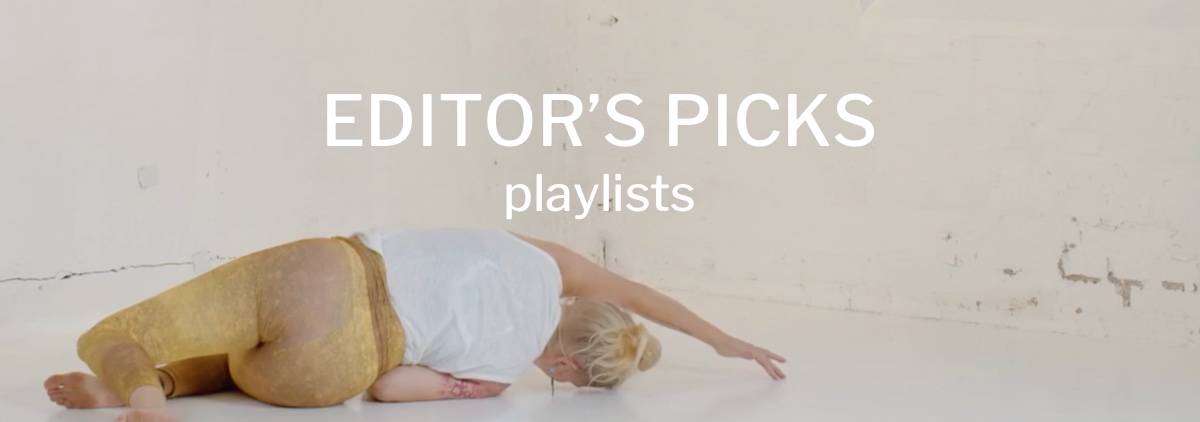
Editor's picks: playlists of the month

Do you want to explore flow through yoga? This month's playlist invites you to do just that - in both physical and calmer yoga styles – so that you can find your flow:

- Morning Flow

- Give flow a go - try 5 different styles

- Mindfulness (inner flow)

You'll find more Flow playlists here!

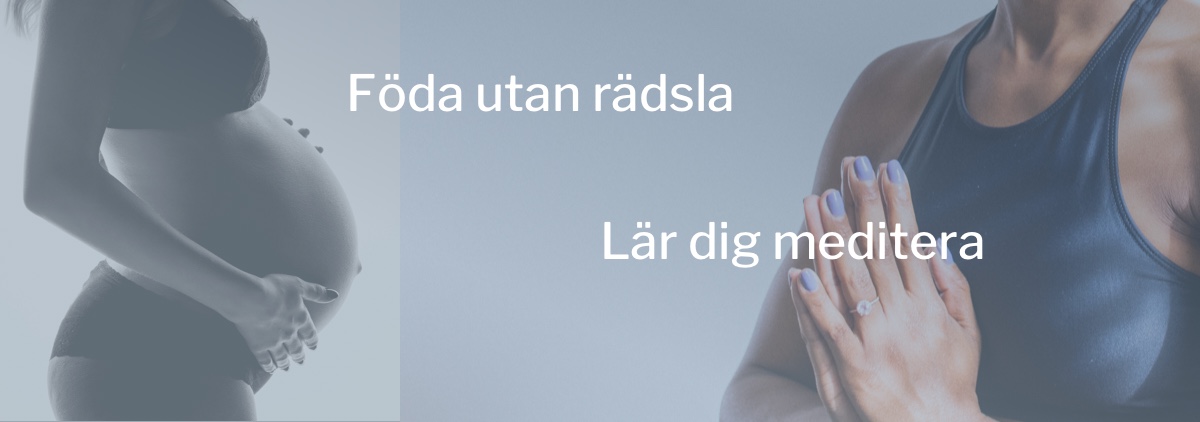
Swedish online courses - 50% discount

Every month we offer some of our fantastic online courses at half price! Catch the offer here. In March, you can choose between:

- Föda utan rädsla: This modern birth preparation prophylaxis course gives you, your partner and the baby in the womb the best conditions for childbirth.

- Lär dig meditera: A 12-week journey for you who are new to meditation, or you who want to deepen your meditation training, guided by Ulrica Norberg.

Read more about yoga and meditation

Video recommendations – explore flow online

Yogobe Video: 83zs Yogobe Video: p7x6 Yogobe Video: 4d7e Yogobe Video: 64fp

To watch an entire video, you need to be logged in as a paying member of Yogobe. New to the service? Try for free for 14 days, without a lock-in period - click here to get started right now!

Open post
What ARE yoga props & how to use them?

What ARE yoga props & how to use them?

28 February 2021 | Av
Yogobe

Yoga accessories, or props, can deepen your yoga practice, make positions more accessible and help you do yoga in a more sustainable way. Props like bolsters, yoga blocks, belts and blankets may seem advanced to use but once you know how to use them they can become your best friends in your practice. Learn more about using props here!


Props – what, how and why?

Yoga accessories or props as they are also called, are various tools that can support your yoga practice and help you enhance your experience in yoga. They can both relieve the body in relaxing positions to release tension - and create power in other positions to make contact with your muscles.

B.K.S. Iyengar, who developed Iyengaryogan, introduced yoga props so that all yoga practitioners could do yoga regardless of physical condition or age. Props can help you make positions more efficient, easier, more stable and provide the support your body needs. Watch one of our recommended videos at the bottom of the post to learn more about how to use props and test classes where they are used. If you are interested in buying props, you will find everything you need for your yoga practice in the Yogobe Store.

Below, you can learn more about different yoga props and how they can support your yoga practice:

Yoga blankets – provides warmth and support

In addition to being a warming friend during relaxation, a yoga blanket is a fantastic tool in all possible positions. It can provide support under the knees, you can roll it up under the sitting bones when you sit in meditation and you can use it as support when the carpet or floor feels too hard. The size and weight distinguish a yoga blanket from a "regular" blanket.

Yoga blocks – a versatile tools

Yoga blocks are a versatile tool that can be used in several different ways in your yoga practice to improve the technique and make the positions more accessible. Placing the hands on two blocks extends the arms in positions such as forward folds and lunges, and they also support in yoga positions that work with the sides of the body and can be used as support in back bends. Yoga blocks are also a useful aid for both activating the muscles in physical yoga forms and for relaxing in calmer yoga forms such as yin and restorative yoga.

Yoga belt/yoga strap – helps your mobility

A yoga belt, also called a yoga strap, is a smart aid that you can use in positions where your mobility is limited, for example in positions when you should reach your feet and toes. The yoga belt then acts as an extension of your arms and allows you to get deeper into the position. If you are hypermobile, the yoga belt can provide a stabilizing support.

Yoga bolster – provides you with comfort & support

Bolsters are large, cylindrical pillows used to support the body in various positions. They relieve the body in all forms of yoga, but are especially useful in yin and restorative yoga to be able to achieve deeper relaxation. You can have the pad under your knees to relieve the lumbar spine in savasana, lean against it in a forward fold or sit on it during meditation.

Eye pillos – for your relaxation during slow yoga styles

During savasana and in calmer forms of yoga such as yin, restorative yoga and yoga nidra, an eye pillow is the icing on the cake. Many eye pillows are filled with lavender that smells lovely and has a calming effect.

Meditation pillow – for a better posture

With the help of a meditation pillow, you sit comfortably with a good posture for a longer period of time, which makes it easier for you to relax and focus on your yoga or meditation practice. The meditation pillow supports the sitting position by the hip coming up a little higher than your knees, which stabilizes the spine and improves posture.

Yoga mat towel – for sweaty yoga practices

A mat towel is a thin, suber-absorbent towel that is placed on the yoga mat and is perfect for sweaty hot yoga sessions and vinyasa classes. Mat towels provide good grip, are easy to take with you and can also be used as a hygienic protection over the mat at the yoga studio or gym.

Tip: Even if you have been yoga for a while, try using different props and see how it feels, maybe you can get a new experience of your body and positions.

Video recommendations – classes with props 

Yogobe Video: 5w2g Yogobe Video: 8s7w Yogobe Video: 3dh5 Yogobe Video: f85c Yogobe Video: fw68 Yogobe Video: 26tf

To see a whole video you need to be logged in as a paying Yogobe member. Haven't tried Yogobe before? Try it for free during 14 days – click here to get started right away!

Open post
9 tips for creating a regular yoga practice

9 tips for creating a regular yoga practice

09 February 2021 | Av
Yogobe

It can feel difficult to get started with yoga. Making yoga a part of your daily routine - can feel even more difficult. But you will get there! Get helpful tips on how to create a regular yoga practice here. 


How to make yoga a part of your daily routine

Have you fallen in love with the wonderful feeling in body and soul that comes after a yoga session? Do you want to take the step from just doing yoga now and then, to making yoga a regular practice? It takes a lot of discipline, dedication and smart planning, but if you have the will  you are already a long way off. Here are nine tips to help you get started:

  • Don't start with a bang
    Start with short sessions to get into the routine, it can feel overwhelming to have the time for longer sessions - you dont' have to do 90 minutes of yoga every day, 15 minutes is enough. Or five sun salutations if time is short. The most important thing is that you step up on the yoga mat.
  • Find a conscious breath
    Breathing is crucial to find focus and to release tension in the body. At first, it can be difficult to find your way into breathing. But give this time, it will come. Slowly but surely you will notice that your breaths become longer, deeper and more conscious. Breathing will also be your proof that you have not gone too deep into the physical positions. If your breathing stagnates and it becomes difficult to take long breaths, you have gone too far and need to back off.
  • Listen to your body
    Some days your body may not want, and need, the practice you have chosen. Adapt your practice instead of forcing yourself into positions and flows that are not compatible with how you are feeling. Be kind to yourself!
  • Learn the technique 
    By learning the techniques of the positions, you will get more out of your yoga and create space in your body so that energy and breathing can flow. So while at first it may seem more tempting to practice those advanced positions, focus on learning the technique in the "simpler" and basic positions. You will benefit from this when it is time to test other positions. You also build a strong foundation that prevents injuries. With Yogobe you can practice your techniques with the help of our technique videos!
  • Invest in a good yoga mat
    A good yoga mat will help you with your practice. It gives you grip and makes you feel safer. Other yoga props such as blocks, belts and bolsters are also good to invest in as they help you with the technique and to get into the positions in the best possible way. You will find everything you need in the Yogobe Store.
  • Create a balance between activity and rest
    Creating a balance between physical activity and recovery is an important factor in our well-being. If you practice a physically demanding yoga style or perhaps combine your yoga with exercise, it is good if you take days to do calmer forms of yoga such as yin yoga or restorative yoga, meditation or yoga nidra so that your body can rest and recover.
  • Keep a diary of your practice
    Reflect on what felt good about today's practice, and what felt less good. Write down new positions and phrases you have learned.
  • Try to yoga in peace and quiet
    Peace and quiet is preferable when practicing yoga. Especially for those who are new to yoga as it is easier to be distracted by sounds and impressions. If it is quiet around you, you can more easily focus on your breath. But – life is not peace and quiet exactly when you want it to – so be kind to yourself and do your yoga when and where you have the opportunity.
  • Patience is the key to success
    There will be days when it feels like there is not enough time, or when you can't or don't want to step up on the yoga mat. Customize your practice, do the least possible or skip a day if that's what you need. Be patient with the process and most importantly - be patient with yourself. Do not judge yourself if you miss out one day. Instead, try to accept the situation and focus on getting up on your yoga mat the next day.

Read more about yoga and breathing

Video recommendations – get started with a regular yoga practice

Yogobe Video: 8f9x Yogobe Video: 7d5x Yogobe Video: xe68 Yogobe Video: d7h8

To watch a full video you need to be logged in as a paying Yogobe member. Haven't tried Yogobe before? Try it for free during 14 days – get started here!
 

Open post
Exercise for long-term wellbeing - here’s how you get started

Exercise for long-term wellbeing - here’s how you get started

10 January 2021 | Av

When life is fraught with anxiety, it can be difficult to fit in exercise, even though that’s when we need it the most. Begin with shorter training sequences and it will be easier to get started. That way you will create a habit for long-term health. Read more about how to get started here!

Three tips to get started with training when it feels daunting

Now in pandemic times, it is even more important to get moving! It’s also harder I have to add because when stress takes over and the only thing you can do to ease the nervous system is to bake a carrot cake (as my husband and I did when we were sick, haha). But after baking several, eating them and realizing that a cake a day is a terrible consolation for a still body, we encouraged each other to give ourselves 30 minutes of exercise a day to begin with, until we were back on the roll.

Three things to remember, if it feels really IMPOSSIBLE to get going:

  1. You are not alone, if you need a hand, reach out to me on Instagram messages.
  2. You do not need 90 minutes at the gym. You just have to BEGIN with a short session each day.
  3. YOU have all the wisdom within you, but we can not do everything ourselves! Sometimes you need a little help and then myself, Yogobe, other professionals, nice sneakers, good music, etc, etc are there to help. Make a decision, ask for help, and let’s do this!!

Make exercise and movement a part of everyday life

It is often overwhelming to embark on a huge training program in the beginning. After over 20 years in the profession and really hundreds of different types of clients, what I know for sure is that if you create a habit that you can do every day, it does more for health than if you try to quick-fix your way through with a 30 day transformation program and then expect that everything will work out for the best. EVERYONE is different, and is motivated by different things, but my thesis is that IF you can make exercise and movement a habit, a part of everyday life, it will definitely be better in the long run.

I strongly believe in creating triggers. Like listening to the right song or music or having a little routine that gets you started. Another trick is to plan the training and NOT cancel it. Even if it will be 3x10 minutes a week at first, you have to start somewhere. The third is to have a training date! Maybe instead of having a coffee with a friend, suggest a brisk walk in the park or share a PT session.

Let the motivation come from within

I often get questions about tips to get started exercising regularly. My advice is actually that we must change the attitude that motivation comes from outside, and instead work on creating the motivation that comes from within. Of course, it is not just about changing it by the blink of an eye, but even if this takes time, it is valuable for lifelong well-being, instead of living in a way where you are constantly looking for the pull from the outside. And another tip is to create opportunities where you move. Skip taking the car sometimes and cycling or walking several times a week for example. Everything counts when the other opinion is to do nothing.

So what exercises should you invest in when time is short? It all depends on what the goal is, of course. If you just want to feel good and feel fit and healthy, then it is great to plan a little bit of each modality. Mobility, so that you are well prepared for other training and do not injure yourself, stretching because our lives are often sitting or stillness, strength because we all really need to activate and build muscle to get stronger. A little bit of everything. 30 minutes a day is definitely better than having anxiety about not having 90 minutes to pump iron.

Photos: Kitty Lingmerth-Lingmerth Photography/James Lee Wall Photo

Further reading

Videos online - short and effective training with Tanja Djelevic

Yogobe Video: 3x5z Yogobe Video: 6zsh Yogobe Video: 7y9d Yogobe Video: sv8k

To watch a full video you need to be logged in as a paying Yogobe member. Haven't tried Yogobe before? Try it for free during 14 days – get started here!
Open post
Restorative yoga – an antidote to stress

Restorative yoga – an antidote to stress

06 December 2020 | Av

I fell in love with restorative yoga – this amazing antidote to stress – 14 years ago when it became my friend in need and helped me through a period of illness. Here I share my experiences from this amazing yoga style, why restorative yoga is so powerful  and how it can be a tool for stress release. 


Restorative yoga – calming and relaxing

The impact restorative yoga has in releasing stress and tension is very personal. About 14 years ago I had a bout of serious asthma attacks that were life changing. I was continually in and out of the hospital and put on high levels of cortisone for an extended period that created extreme anxiety and panic attacks. I started practicing restorative yoga which was integral to my recovery. Restorative yoga calmed my nervous system, relaxed my body and released tension from my breath, all of which were bracing for and contributing to future asthma attacks. No amount of trying to talk myself out of the situation helped because my whole system was stuck in a heightened state of tension. I needed to bypass my mind and activate the parasympathetic nervous system, which is exactly what restorative yoga does.

Why restorative is the perfect antidote to stress 

Modern life is fast paced and filled with stressors that contribute to a low-grade level of stress that we're often unaware off. This continuous state of SNS arousal has lead to many modern day illnesses such as asthma, cancer, heart disease and stress disorders. Restorative provides the perfect antidote to stress because it creates a supported pause. By completely supporting the body and being still for extended periods the breath, the mind and the nervous system all begins to calm down.

Different restorative poses can be used for different purposes though they all help to calm and quiet the nervous system. There are poses that open the breath and lift our spirits when we're feeling depressed, poses that are supportive and nurturing when we're feeling anxious and poses that target specific parts of the body where tension accumulates.

Restorative yoga releases tension on the physical, mental and emotional level. Since our bodies store all our past experiences, when we let go of the holding in the physical body we often have strong emotional releases as suppressed emotions and past experiences locked in the body bubble up.

One of the advantages of a restorative practice is that it can be practiced by everyone. People who aren't physically able to practice asana (yoga poses), such as the elderly and physically challenged can reap the benefits of deep relaxation and energetic rebalancing. 

Target imbalances with restorative yoga

Restorative poses by themselves open energetic lines in the body because of the amount of time spent in each pose. We have 72,000 energetic pathways in the body and seven major energetic centers or chakras that run along the spine. I’ve developed a restorative series that focuses on balancing the chakras. Imbalances in any chakra over an extended period of time can create imbalance in the others and is often responsible for imbalances in our bodies and our lives. By combining specific subtle body balancing techniques with specific restorative poses we can target chakra imbalances.

Restorative and Ayurveda
Restorative, like asana is an excellent way to correct doshic imbalances. When restorative postures are sequenced and adapted for specific imbalances along with specific yoga nidra practices, visualizations and mantras they are even more powerful.

Restorative and Yoga Nidra 
I grew up practicing yoga nidra in my teens in Mumbai, India. The stillness it led me into had a profound impact on my practice and my teaching. Restorative and yoga nidra compliment each other perfectly because restorative leads people into a place of deep stillness which when followed by yoga nidra allows for an even deeper state of surrender enabling the release of past experiences locked in the subconscious and unconscious.

Restorative and the Koshas
The koshas are our five vibratory fields that make up who we are. In restorative, my focus has been on integrating the koshas. I design practices that focus on releasing tension from all five vibratory fields because tension in any of these fields disconnects us from our essence creating unease and a lack of clarity in our lives. By integrating visualization, pranayama, kriya techniques, and mantras into restorative we release tension from these sheaths enabling us to rest back to spirit and bring wisdom and clarity into our lives.

Further reading on restorative and yoga nidra

Videos online with restorative and yoga nidra

Here is a playlist with videos on restorative yoga – all classes in one playlist!

Yogobe Video: g7x9 Yogobe Video: 38tr Yogobe Video: x2b5 Yogobe Video: 24ag

To watch a full video you need to be logged in as a paying Yogobe member. Haven't tried Yogobe before? Try it for free during 14 days – get started here!

Open post

Search

Categories