Vill du också ha tillgång till vårt videobibliotek?

  • 2500 videor
  • Ingen bindningstid
  • Testa utan kostnad

Välkommen till vår blogg

Yoga, träning och hälsoinspiration för dig

Yoga from a scientific perspective – for a sustainable body, mind, and community

Yoga from a scientific perspective – for a sustainable body, mind, and community

06 september 2022 | Av

How can yoga help us to find our way towards restful states and to move our bodies? I will tell you more about yoga’s benefits and what the research says.

Pockets of time where we can catch our breath

Whatever happened to margins, air in the schedule, and our perspectives on tempo? In our modern society, in the chase for efficiency and performance, we quite often find ourselves with packed schedules ready to burst. We seem to somehow have removed the margins, those pockets of time where we can catch our breath and relax. Not only have we built away moments for doing ‘nothing’, moments of physical movement also seem to have gotten lost.

The question I will address here is, how can yoga help us to find our way towards restful states and to move our bodies? I will tell you more about yoga’s benefits and what the research says.

Yoga as a support for physical and mental health (challenges)

Yoga is unique. It is unique in the way that it contains both movement and rest, two things that many of us lack today. This is true from us as individuals, bur also for our society. We have built away getting between places through movement, we have built away the margins in our schedules that would have given us recovery. To mention a few.

Although our health has generally improved over the past 100 years, with increased life expectancy and fewer deaths and infectious diseases, we face other problems. Challenges we face are all the years that we live but with reduced health and function. Today, it is (too) common to be struggling with mental illness such as depression, stress and fatigue, pain e.g. It is easy to think that it does not concern you or me, but most likely you will have already experienced something of the mentioned yourself, or have had someone close to you who has. When challenges like this hit you or your loved ones, it can be very helpful to have wellness and coping strategies at hand.

Fortunately, I think we as communities are starting to realize that many are facing these challenges, and we now know that we can do something about it. But then, what can we do? Yoga might be the answer.

What is yoga?

In order to be able to answer what yoga ’works for’, let's for a moment concretize what we mean by yoga. Even though yoga can take many shapes and forms, within the (medical) scientific landscape, yoga can be described, mainly, as having the following four components:

  • Low-intensity form of physical activity
  • Relaxation
  • Breath
  • Meditation

When researchers investigate the reason why we engage in yoga, it is mainly two reasons that come up:

  • For wellbeing and to prevent ill-health.
  • To take care of pre-existing health problems such as depression, exhaustion, pain, and anxiety.
Reserach shows effects from breathing exercises and meditation

  • When you have two minutes to spare:
    Some researchers investigated the effect of slow breathing on a group of yoga beginners. By breathing slowly for two minutes, both blood pressure and the experience of anxiety were lowered. The likely mechanism behind the effect is increased activation of the calming part of the nervous system. Exciting news, as a large percentage of us walk around with high blood pressure, much due to our lifestyles with a lack of physical activity and stress management.
  • When you want to sleep better:
    The hours of sleep in the day are your most important restorer. The hormone melatonin is an important regulator in the body to stimulate sleep. Some researchers, therefore, wanted to investigate melatonin levels in connection with meditation. A small group of experienced meditators meditated with different techniques, one group meditated for 30 minutes with one technique and another for 60 minutes with another. The meditation took place at midnight just before melatonin levels are at their peak. Blood samples were taken once an hour to measure levels, between 10 pm and 2 am. Another night the same things were measured but without the meditation to check for any differences in levels. Both groups got increased levels of melatonin the night they meditated. The researchers, therefore, theorized about how this effect can positively affect sleep. Most likely, meditation can be practiced at any time of the day, depending on the effect you want to achieve. So you don't necessarily have to meditate in the morning, or at midnight.

The effects of yoga compared to other physical activity

The calmer components of yoga can thus have a positive effect on things that have a strong connection to our health. However, most research that has been done on yoga involves yoga's physical activity components of some kind.

So how does yoga compare to other physical activity? This is something that is currently being researched intensively. As an example, one of the largest studies conducted on mild and moderate depression was conducted in Sweden, where several hundred participants took part. Three training groups (yoga, and two other cardio training groups) performed their training three times a week for 60 minutes, for a total of 12 weeks. That study showed that yoga produced the same effect as moderate- and high-intensity cardio exercise on lowering the level of depression, in particular compared to usual treatment.

In summary, yoga reminds us to move the body we were given and it can make us aware of how it feels at the moment. Yoga also reminds us to slow down, and pace the outer tempo with our inner tempo.

Yoga in the future

Change is inevitable, but which direction change takes can often be influenced by the actions we and our communities choose to take.

I believe that we have to start to rethink how we construct our schedules in the present moment, and for the future. In politics, at workplaces, at schools, in our residential areas, and at home. Building sustainable practices and communities means bringing back the margins and pockets of space in our schedules to do nothing, as well as for opportunities to move and relax. To create opportunities for yoga. As individuals, we must show that we want change through the choices we make on a daily basis. We must be the role models we want others to be for us. For ourselves, but above all, for others. It is something we can do together. Every small change matter, because it accumulates into something bigger. Our vision about the future begins right now, in this exact moment, through action. I guess next question is: what will your next step be?

Foto: Malin Wittig, copywright Bonnier Fakta (top image)

Playlists and more to read about science and yoga

Videos to get you started

Yogobe Video: 4gu3 Yogobe Video: ax64 Yogobe Video: 9uh4 Yogobe Video: d72r Yogobe Video: pf54 Yogobe Video: s6k9

To see a whole video you need to be logged in to Yogobe, as well as a paying member. First time here? Try our subscription service – free of charge for 14 days! 

Refereces:

Öppna inlägget
Så får du till vardagsträningen genom att pausa smart

Så får du till vardagsträningen genom att pausa smart

06 september 2022 | Av

Få till vardagsträning och "dutt-träning" – pauser i vardagen! Här får du får du mer inspiration samt förslag på ett dagsschema! 

Skapa helhetssyn på din hälsa med vardagsträning

Att röra sig lite varje dag – eller dutt-träning som jag kallar det – är lika bra som det låter roligt. Om ni förstår vad jag menar. Att dutta sig i form kan ju tyckas låta lite fjuttigt men det behöver det inte alls vara.

Det handlar om att få en helhetssyn på sin hälsa. Att förstå vikten av att röra sig varje dag. Chansen är stor att du kommer i bättre form genom att träna lite varje dag än att köra två ordentliga pass per vecka och sen ha ett stillasittande liv.

Dutt-träning passar verkligen alla. Det är ett bra sätt för dig som är van att träna att få in mer träning. Du kanske kan smyga in yoga/rörelse om du är en stel löpare eller kör mycket styrketräning. Eller varför inte lägga på lite styrkeövningar om du yogar mycket och behöver komplettera med styrka. Ja, ni fattar säkert vad jag menar.

Det är en bra ingång till träning för dig som är nybörjare. Ibland är steget till att gå till gymmet eller yogaklasser, att ha en tid bokad, för stort – då är det här ett sätt att koma igång.

Tips på upplägg – en dag med dutt-träning & smarta pauser

  • 07.00: Gör några mjuka och välgörande yogaövningar, sittande eller liggande på golvet. Andas och sätt din känsla för dagen. Vill du ha lite mer power kan du även lägga till tre solhälsningar.
  • 08.00: Promenera eller cykla till jobbet. Åker du kollektivt – kliv av någon station tidigare och promenera sista biten till jobbet. Gå i alla trappor.
  • 10.00: Träna armar, axlar och rygg – tio minuter räcker. Armhävningar mot ett bord eller stol, dips med händerna mot en stol är bra övningar som är lätta att utföra i olika miljöer. Dragövningar med gummiband, till exempel rodd, är också toppen för överkroppen.
  • 12.00: Ta en powerwalk på 15 minuter innan du äter lunch. Gå i trapporna på jobbet.
  • 15.00: Träna ben och rumpa – tio minuter räcker. Varför inte köra en squat-utmaning med kollegorna? Genom att göra utfallsteg och squats (djupa benböj) varje dag kommer du långt. Lägg gärna till vikter.
  • 17.00: Gå eller cykla på väg hem från jobbet. Ta i lite extra så du får upp pulsen.
  • 21.00: Lugn yoga eller andra avslappningsövningar i 15 minuter – ett perfekt sätt att varva ner inför natten. Det finns massor av övningar, avslappning, meditation att välja mellan på Yogobe.

Se upp så att du inte bara slänger in några övningar och stressar igenom. Då är det risk att träningen blir ytterligare ett stressmoment och det vill vi undvika. Njut av din träning och dina andetag. Låt det blir en avkopplande stund.

Lycka till!
//Jenny

Pausa Smart – vår tjänst för arbetsgivare

För att hjälpa dig att ta små mikropauser och få igång kroppen under arbetsdagen erbjuder vi på Yogobe tjänsten Pausa Smart som riktar sig till arbetsgivare. Med andnings- och fokusövningar, rörlighet, mindfulness med mera. Läs mer om Pausa Smart.

Läs mer om nya vanor och träning

Vardagsträning online – rörelse på jobbet

Yogobe Video: 32es Yogobe Video: xg57 Yogobe Video: 65eh Yogobe Video: 6a9x

För att se en hel video behöver du vara inloggad som betalande medlem hos Yogobe. Ny till tjänsten? Prova gratis i 14 dagar, utan bindningstid – klicka här och kom igång direkt!

Öppna inlägget
How does the breath work & benefits of conscious breathing

How does the breath work & benefits of conscious breathing

31 augusti 2022 | Av

Curious about the breath, how it works and the benefits of conscious breathing? Here I'll introduce you to the basics and inspire you to start to add breathing techniques into everyday life. 

Conscious breathing as a way to battle stress and tension

A great step to a healthy attitude about stress is to realize our ownership over our brain and learn to engage our brain intentionally to manage the consequences of the fight and flight response.

It is actually very simple for us to learn to intentionally engage the parasympathetic nervous system, which controls the relaxation response in our body. The relaxation response returns the body’s resources toward the digestive system but also the brain balance needed to maintain a healthy brain wave. We have the power to educate our own brain to do so intentionally. Once the overstimulated fight and flight response returns under control, the true potential of our brain becomes accessible, our learning ability is enhanced, and our executive reasoning functions become strong again.

Hence, the more we can learn conscious breathing the better. We enhance our quality of life via how we breathe.

About the breath

  • The breath is one of only two functions of the body that is both voluntary and involuntary (the other function is blinking). If we can master breath consciously, we can control other functions in the body like heart rate, blood pressure, and breath. Through the breath, we can access the parasympathetic nervous system and activate the relaxation response in the brain, which results in stress reduction for our entire system.
  • Most people are not breathing to their fullest capacity, which actually means that the nerve cells do not get fully activated, which chokes the life force in us. Through conscious breathing, we can mindfully generate more oxygen for the body.
  • Tightness or stress in the body often creates tightness in the breath. Think of wearing a body suit that is too tight — it is hard to breathe. When your body is tight and tense, you can’t breathe fully. You can be tight in your breathing body just like you are tight in your physical body. Some of this is physical strain impinging on the breath volume; some is an emotional or mental blockage preventing us from breathing fully.
  • Our breathing patterns are closely linked to our emotional states. We breathe differently when we are angry, excited, tired or when we are nervous. Yet, it works the other way too. We can calm or energize ourselves by changing our breathing patterns. Even by just taking time out to consciously become more aware of our breath we can help to start to alter our emotions.

What is pranayama?

Pranayama is a form of breath gym. It is where you go when you want to conditions yourself from the inside. In relation to asana practice if you are a yogi, it will enhance the effects of your physical practice. If you exercise, you will not only perform better in the whatever sport or fitness regim you have, it will give you greater focus, concentration and body awareness. You will notice how much better you sleep at night, that your posture has improved and that you are less stressed. Pranayama is a bridge between you and anything. For those of you who meditate, this is the path to help you quiet those disturbing thought and emotional patterns.

When prana, the life force within us in the yogic tradition, is spread evenly throughout the cellular body, compassion and equanimity arise and the fluctuations of the mind cease. This phenomenon can be achieved by cultivating the art of listening intentionally to your breath. To let go of the need to maneuver and control the breath. Pranayama and meditation are acts of letting go. With these practices, you learn how to let go of psychological blockages and attachments. They will over time help you to free yourself from who you think you are and get you in touch with the essence of who you really are.

The practice of pranayama takes us beyond our skeletal, muscular and circulatory systems, even beyond the nervous and endocrine systems. In its essence, this practice aims to attain mastery over the life force itself. And in that pursuit, your body heals, your mind gets strong and focused and your spirit free and happy.

Learn more about the breath – online course with Ulrica Norberg

Join Ulricas online course here at Yogobe – The art of Breathing – where you get to explore the power of the breath and learn how to balance your body and mind through different breathing techniques.

Read more

Breathing techniques & pranayama online

Yogobe Video: 3r4k Yogobe Video: 3t8f

Yogobe Video: 52bd Yogobe Video: 9uh4
Öppna inlägget
Höj ribban – ta träningen till nästa nivå

Höj ribban – ta träningen till nästa nivå

30 augusti 2022 | Av
Julia Glutz

Vill du ta din träning till en ny nivå? Det kräver att du skapar utrymme där träningen prioriteras är effektiv och ger resultat. Jag ger här konkreta tips!

Prioritera din träning

Om du vill ta din träning till en ny nivå och höja ribban behöver du fatta ett beslut, du behöver prioritera dig själv och din träning. Du måste avsätta tid och du måste sätta en plan för hur du kommer framåt, en handlingsplan. OCH kom ihåg att träna lite hårdare är inte alltid skönt, ganska sällan faktiskt. Men efter en pass mår du förmodligen som en stjärna och som jag brukar säga, bra träningsvärk är som goast dag tre. :-D 

Kontinuitet är nyckeln till resultaten

Det går inte att samla träning på banken, träning och kondition fungerar inte som valutor. Du behöver hålla en kontinuitet som innebär att du får till träningen varje vecka, månad och gärna år. Många av de som tränar har en livsstil där träning och rörelse är en belöning. Att komma dit tar tid för vissa och kräver att du har rörelse som rutin och att du ser resultat som gör att du blir pepp och bidrar till att stunden känns glädjande. När jag pratar om resultat pratar jag om hur du som individ mår efter träning, det kan vara alltifrån bättre kondition till en gladare och friskare kropp. 

Så höjer du ribban – ta träningen till nästa nivå 

  • Nulägesrapport: Du behöver konkretisera vart du befinner dig i din träning och vilket mål du har. Hur kan du höja ribban och utmana dig själv ännu mera än du redan gör? Skapa en handlingsplan!
  • Tid: Hur ser dina dagar ut för diverse aktiviteter så som arbete, familj och fritid. Är det något du kan dra in på för att skapa utrymme eller finns det kanske redan plats och tid för träning. Viktigt att även se till att du har tid för sömn och återhämtning.
  • Planering: Planera veckovis. Viktigt att bestämma vilka dagar du skall träna och hur länge, samt dagar för återhämtning. Blir det konkret är det lättare att hålla sig till planen och om det inte fungerar är det enkelt att förstå hur du kan justera för att optimera din träning. Behöver du stöd här ta hjälp av en kunnig personlig tränare.

Vill du få en ordentlig genomkörare av kroppen och svettas rejält? Testa mitt nya träningsprogram 21 dagar träningsglöd! Ingår i din prenumeration samt prova-på-period

Exempel på träningsupplägg:

  • Nina vill springa snabbare och få bättre kondition.
    • Nuläge: Brukar hålla ungefär ett 6:30 tempo per km och orkar oftast inte springa längre än 8 km. Hon springer 1 eller max 2 ggr per vecka.
    • Målsättning: Skulle gärna vilja hålla ett 5 tempo per km och springa en mil.
    • Detta krävs: Nina måste skapa utrymme för att springa oftare. Hon bör få in ett långpass i veckan (långpass är ett pass som är längre än vad hon brukar springa och som utmanar hennes uthållighet) och 1- 2 tröskelpass där hon utmanar sig själv med intervaller. Också viktigt att köra ett styrkepass/prehab anpassat för löpare.
  • Peter gillar att bygga muskler.
    • Nuläge: Han känner sig ofta lite lat på gymmet och det blir inte riktigt någon utveckling i hans träning.
    • Målsättning: Vill få mera synliga muskler och känna sig starkare.
    • Detta krävs: Peter bör sätta en handlingsplan där han går igenom hela kroppen tre till fyra gånger per vecka. En bra idé är att göra övningar som inkluderar flera muskelgrupper samtidigt. Skivstång är ett bra redskap för just detta. Den stora utmaningen ligger i att våga ta i. Att faktiskt lyfta tungt och pressa sig själv för att få utveckling. Det skall inte vara bekvämt att träna, det skall vara peppande! Återhämtning för optimal muskleltillväxt är också ett måste.

Lästips för inspiration

Onlineträning för att utvecklas & träna hårt

Klasser för tuffare träning:

Yogobe Video: r3e8 Yogobe Video: 8xb4 Yogobe Video: he94 Yogobe Video: c79r

För att se en hel video behöver du vara inloggad som betalande medlem hos Yogobe. Ny till tjänsten? Prova gratis i 14 dagar, utan bindningstid. Kom igång direkt!

Öppna inlägget
Om mod och hur du kan våga mer som yogalärare

Om mod och hur du kan våga mer som yogalärare

28 augusti 2022 | Av
Yogobe

Låt dig inspireras av modiga yogalärare – du är det säkert mer än du tror själv med! Att bara ställa sig där framför klassen kan vara ett stort mod. Kanske ens att ta steget att gå en utbildning. Här får du tankar om vad mod är, och hur du kan inspirera dig till att våga mer.

Modet att våga leda som yogalärare

Vi frågade i #BEYOGA365, när yogalärare känt sig modiga och vad mod är för dem. Vi frågade också både deltagare och yogalärare vem de inspireras av som de tycker är modig. Ta dig gärna en liten stund och fundera på det du också. Du är troligtvis modig ofta, varje gång du följer hjärtat även när det knyter sig eller pirrar i magen! Det är ofta bara lättare att se det hos andra än sig själv.

Flera svarade att mod är att:

  • Våga vara sårbar, att känna och visa alla sina känslor och hålla utrymme för alla känslor hos deltagarna – inte bara "de bra" känslorna.
  • Att släppa loss och vara sig själva (och inspirera deltagarna till detsamma).

Jenny Ström Öberg; Yogalärare, PT, coach och del av Team Yogobe:

  • Mod är att våga vara den man vill vara. Att stå för det man vill och att följa sitt hjärta.
  • Att lita på att allt kommer bli bra.
  • Att dela med sig och på så sätt hjälpa andra. När starka modiga människor möts skapas mer mod och magi, gåshud!

Katja Lehto; Yogalärare och gruppträningsinstruktör:

  • Stå fast vid sitt sätt att förmedla yoga, att förmedla den på det sätt den resonerar i dig. Att självklart anpassa för individuella behov, men att inte anpassa den utifrån förväntningar från deltagare/uppdragsgivare OM det gör att du tappar bort din essens, det du vill förmedla.
  • Kunna vara kritisk till den bransch vi jobbar i och att lyfta svåra frågor i vårt jobb.
  • Kunna sätta saker i kontext och inte tro blint på allt som sägs/undervisas i yogan. Att kunna se att vissa saker kanske var korrekt i en annan tid, utifrån en annan kunskap, men att den kunskapen inte alltid håller idag.

Linda Löfroth, PT; konceptutvecklare, beteendevetare-student:

  • En bit av mod för mig är att genuint och på riktigt lyssna till andras perspektiv, ta in och omvärdera sin egen sanning. Våga erkänna sig fullt ut mänsklig, kunna ha fel, därefter också själv vidga eller ändra sin egen uppfattning om något.
  • Inspirerande är människor som sätter ord på mänskliga brister och förvandlar det till en känsla av kärlek, acceptans och förlåtelse. Till exempel Björn Natthiko Lindeblad.


Reflektionsövningar: Stärk ditt mod & våga mer

  • Vad står du för inom yogan och varför? Att följa hjärtat, är enligt Brené Brown nära sammankopplat med mod.
  • Vad vill du bli modigare på i din roll som yogalärare?
    • Kan du göra en lista på hur du kan öva detta?
    • Hur känns rädslan/obehaget i din kropp, hur lyder dina tankar?
    • Kan du låta känslan få vara där, kanske med hjälp av RAIN-meditation? Och våga göra det hjärtat längtar efter, trots tankarna som försöker hålla dig borta från potentiella faror?
  • Vem inspireras du av? De egenskaperna har du i dig också – vi har allt i oss, vi är bara olika tränade och olika starka! Vad är det personen du uppskattar gör, kan du rollspela lite och locka fram de delarna i dig? Det handlar inte om att bli någon annan, utan våga vara mer du!
  • För att orka vara modig, kan vi också behöva trygghet och att hämta kraft. Var och hur gör du det bäst? Ett par sätt är yoga och meditation, för att hämta hem dig själv.

Meditation, yoga och övningar för mod

Läs mer om mod och att vara yogalärare

Yoga och övningar för att väcka mod och kraft

Yogobe Video: aw49 Yogobe Video: d5f4 Yogobe Video: r85w Yogobe Video: f46h

För att se en hel video behöver du vara inloggad som betalande medlem hos Yogobe. Ny till tjänsten? Prova gratis i 14 dagar, utan bindningstid – klicka här och kom igång direkt!

Öppna inlägget
Salutary qualities of cooling foods on a hot summer's day

Salutary qualities of cooling foods on a hot summer's day

26 augusti 2022 | Av

Learn how eating according to Traditional Chinese Medicine (TCM) can benefit your health! This is our third blog post in the series about vegetarian, healthy food.

Feed your body and wellbeing with TCM

We eat every day, and it is such a beautiful opportunity to do something good for our body, mind and spirit.  When I was studying shiatsu massage – a type of Japanese massage that works with pressure points – I also learned about Traditional Chinese Medicine (TCM). Food and herbs have an important place in this tradition. It was so inspiring! To me, it was such a new way to look at food.

While Western medicine focuses mainly on the content of the food – like vitamins, calories and minerals – TCM focuses more on how the food works energetically in the body. We look at how food can support our physical and emotional well-being during varying times of the day, different seasons and even during different phases of our life. It is all about creating balance, harmony and a natural flow.

5 tips from Traditional Chinese Medicine about food

  • Keep your stomach nice and warm: In TCM we look at whether foods are more Yang (warming or even hot), neutral, or Yin (cooling or even cold). Our stomach is seen as a little soup pot and our spleen as a fire that heats up the ‘soup’ (food) in our stomach. When the ‘soup’ is nice and warm, we can extract the nutrition well from our stomach, and we also digest and process the foods well. If the ‘soup’ doesn’t warm up well, we can eat a lot, but still lack nutrition.
  • Hydrate yourself with ‘wet’ meals and warm water: In TCM, the best way to hydrate is considered through ‘wet’ meals, like warm soups, stews and sauces. This way of hydrating is the most gentle on our stomach. Water in itself, besides being physically cold (if not heated) – is also considered energetically cold. On a summer’s day some more cold water won’t hurt you, but the general advice in TCM is to drink preferably warm or hot water. Coffee and tea are not recommended in large quantities: They are considered medicine due to their strong qualities (and thus be taken in smaller amounts). Their ‘bitter’ nature also makes us dehydrate and pee.

Photo: Elaine Lilje

  • Choose the right ingredients – neutral or warming as the base
  1. Neutral and warming ingredients are generally those that have a mild and slightly naturally sweet flavor. Think of grains such as rice, oats, wheat and quinoa, but also of mild sweet vegetables, like carrot, pumpkin, beets, cabbage, potatoes, corn.  Proteins that are warm or neutral are eggs, beans, peas, old hard cheese.
  2. Cold food: Lettuce, spinach, celery, cucumber, zucchini, pack choy, tomato, eggplant. Basically, lots of leafy greens and also some fruits. Many fruits are cooling or cold: like bananas, melon, pineapple, apples, pears and plums. Eating fruits on a hot day, is therefore a nice way to cool down (not all though, as we'll see later).
  3. Hot foods! Think of chocolate, coffee, ginger, chili, raw onions, avocado, lamb, pungent cheeses, garlic and shrimps. Also, certain fruits, like mango, pomegranate, lychee and cherries. It’s important to keep the balance. If you have a tendency to have lots of ‘heat’ and much upward energy – like in the form of headaches, red face, tensions in the upper body, then it can be good to reduce the hot foods. Even more so on a summer’s day, when it’s also hot outside.
  4. To a certain extent, we can influence the cooling and warming effect of foods by the way we prepare them. Grilling and drying foods, brings a hot and warm quality. The other way around, making a mango into an ice cream or a smoothie will make its effect on our body colder. In essence, the quality of the ingredient stays the same, but we can nudge them a bit further down the Yin-Yang spectrum.
  • Dairy is special in TCM: Think of milk, soft cheeses, yogurt, butter, cream and so on. Most dairy belongs to the cooling foods. But beside being ‘cool’, dairy is said to create a dampness and slime in the body that makes us more slow, it can make us tired, a bit phlegmatic. No worries! TCM doesn’t say not to eat it, but to eat it with the right measure, in smaller amounts. Dairy that is fermented, like kefir and yogurt, are also considered more beneficial.
  • Play with Yin and Yang foods and find your way: We are all different. Some of us have a tendency to be more cold and slow, and some of us are more warm and maybe fast. What we eat can help us find a comfortable and happy balance.

Nice summer salad

Well… lots to play with! I hope you enjoyed these insights and principles. I will add a nice summer salad to this recipe that has a beautiful balance between warming and cooling elements, so it’s refreshing, yet nicely supportive to our digestion. Millet salad – with roasted veggies, orange and almonds

Mundekullas Gröna Kök – want to buy Stephanie's book?

Mundekullas Gröna Kök won the Gourmand Cookbook Awards 2021 for Best Vegetarian Cookbook in Sweden and Best Hotel Cookbook in the World. The book features more than 70 vegan and vegetarian recipes and 10 chapters on playing with flavors and textures, how to design and plant-based meal or buffet, the love for cooking farm-to-table. Buy the book here

The series about healthy vegetarian food

Breathing & yoga online to cool you down

Yogobe Video: ba78 Yogobe Video: du83

To watch a full video you need to be logged in as a paying Yogobe member. Haven't tried Yogobe before? Try it for free during 14 days – get started here!

Mundekulla retreat center

Mundekulla is an ecological course and retreat center in the Småland countryside. At Mundekulla, people meet for courses, conferences and festivals, focusing on personal development, mindfulness, creativity, nature and of course beautiful nutritious food! Since its start over 20 years ago, the center has been built on sustainable principles. With traditional building methods and green energy, as well as with a focus on social justice and promoting various peace projects. The whole idea with Mundekulla is to create and co-create learning, art, music, community and health. The best thing is all the wonderful, meaningful encounters with other people. That's the core. Find out more at mundekulla.se

Photographer: Elaine Lilje

Öppna inlägget
Vad är mod & sårbarhet? Och hur kan du öva upp dessa? 

Vad är mod & sårbarhet? Och hur kan du öva upp dessa? 

23 augusti 2022 | Av
Yogobe

Mod att möta rädslor, vara sårbar och uttrycka sig, även i ovisshet – hur lyckas jag med det? Inspireras av Brené Brown och öva din sårbarhet & och att stå stadig i din kraft!

Vad är mod?

Enligt Nationalencyklopedin betyder mod: Förmåga att övervinna sin rädsla och handla i en riskfylld situation för att nå ett viktigt mål. Det är därför inte heller det som syns som alltid är det verkligt modiga, utan var rädslan finns, vare sig det är en inre rädsla eller livsfara.

  • Du behöver inte kasta dig ut i alla rädslor. Men vad skulle du verkligen vilja utmana, och varför?
  • Hur kan du göra en plan för att möta den rädsla du vill möta?

Mod att vara sårbar

Forskaren och författaren Dr Brené Brown beskriver mod nära förknippat med sårbarhet.  Vi inte kan nå mod, om vi inte utsätter oss för osäkerhet, risk och att visa oss emotionellt.

Så vad är sårbarhet, enligt Brené?

  • Det är inte att berätta allt man tänker på eller att visa alla sina känslor. Utan det handlar om att när något blir svårt och obekvämt – fly inte undan jobbiga samtal och situationer.
  • "Gå ut på arenan". Gör det du tror på från hjärtat, även om du utsätter dig för en risk att bli kritiserad.
  • Älska fastän det inte finns några garantier.
  • Våga vara operfekt. Visa dig som den du är, inte som den du tror att du behöver vara.

Sårbarhet hör ihop med närvaro och kontakt – till sig själv och andra. Brené har studerat skam, och menar att det ofta är ett hinder för att våga vara sårbar. Vi är rädda för att inte höra till, vara goda/smarta/bra nog. Men då dämpar vi också de härliga känslorna. Sårbarheten är dörren både till det jobbiga – och det upplyftande, till kärlek och djup, äkta samhörighet.

Övning för mod & sårbarhet

Första steget är att veta vad du själv bär på, hur det känns i kroppen och vad du tänker. Meditation och självreflektion är två vägar. Skriv sedan gärna ner vad du upptäcker:

  • Är det något område som du vill öppna upp för mer sårbarhet i ditt liv?
  • Hur kan du våga stå upp för den du är och visa dig, utan ursäkter – som om du förtjänar det (vilket du gör!) Äg dina känslor, din situation och vad du vill i livet. Våga ge uttryck för det.

Läs mer om mod & sårbarhet

Övningar & klasser online för självreflektion, närvaro & mod

Yogobe Video: e6u5 Yogobe Video: 8ab9 Yogobe Video: aw49 Yogobe Video: 7fc5

För att se en hel video behöver du vara inloggad som betalande medlem hos Yogobe. Ny till tjänsten? Prova gratis i 14 dagar, utan bindningstid – klicka här och kom igång direkt!

Källor:

Öppna inlägget
Integrating healthy, creative and wholesome eating into your daily life

Integrating healthy, creative and wholesome eating into your daily life

21 augusti 2022 | Av

How do we sustain inspired and healthy cooking and eating in daily life? It’s not always easy! In this blog post, I'll give you tips and inspiration for healthy, creative, and wholesome eating.

Cooking to let go of the day

Sometimes for me, it helps to see cooking not just as something that needs to be done, but rather as a way to unwind. A moment to let go of the day. Especially when I sat behind the computer for a long time or when I had many meetings with people, cooking could be a beautiful way to calm down. It’s a way to work with all my senses and to be in the moment, enjoying the smells, colors, and warmth.

It requires a little mind shift, but it can really bring a more calm and more enjoyable quality to cooking, especially on busy days. Of course, it helps when we have some practical pillars that can help support this.

Tips for healthy, creative and wholesome everyday eating 

  • A good mix of easy and more challenging, creative recipes.
    It’s good to have a whole bunch of easy and fast recipes for daily life, that take under 30-minutes of preparing time. These are the go-to meals on a daily basis: think of vegetable soups, salads with good grains and nuts in them, a simple curry or Indian dal with lentils. We can save the more challenging or time-consuming recipes for weekends and special occasions. You can make the daily recipes more festive by adding some easy but wonderful toppings, like sunflower seeds, sesame, dried cranberries, nuts or fresh herbs.
  • Have easy healthy and yummy ingredients and snacks always available.
    Some of my favorite go-to ingredients for easy and good eating, are: canned butterbeans, dried fruits, frozen tempeh by Bärta, hazelnuts and walnuts, frozen green peas, apples, cucumbers, red paprikas, baby spinach and other lettuce, good olive oil. The great thing about many of these ingredients, is that all you have to do is to combine them on a plate, and you are ready to go.
  • Make extra’s!
    While you are making a soup, a curry or a salad, just make extra! Then you immediately have a good lunch (or another evening meal) for the next day.
  • Food excursions!
    Make the Farmer’s Market, visiting a local farm or buying at REKO-ring (regional networks and markets for local farms) part of a fun (bi-)weekly excursion. This way, you can combine exploring local, healthy and seasonal ingredients, with a nice day out with family or friends.

Photo: Sara Vitale

  • Foraging and walks in nature.
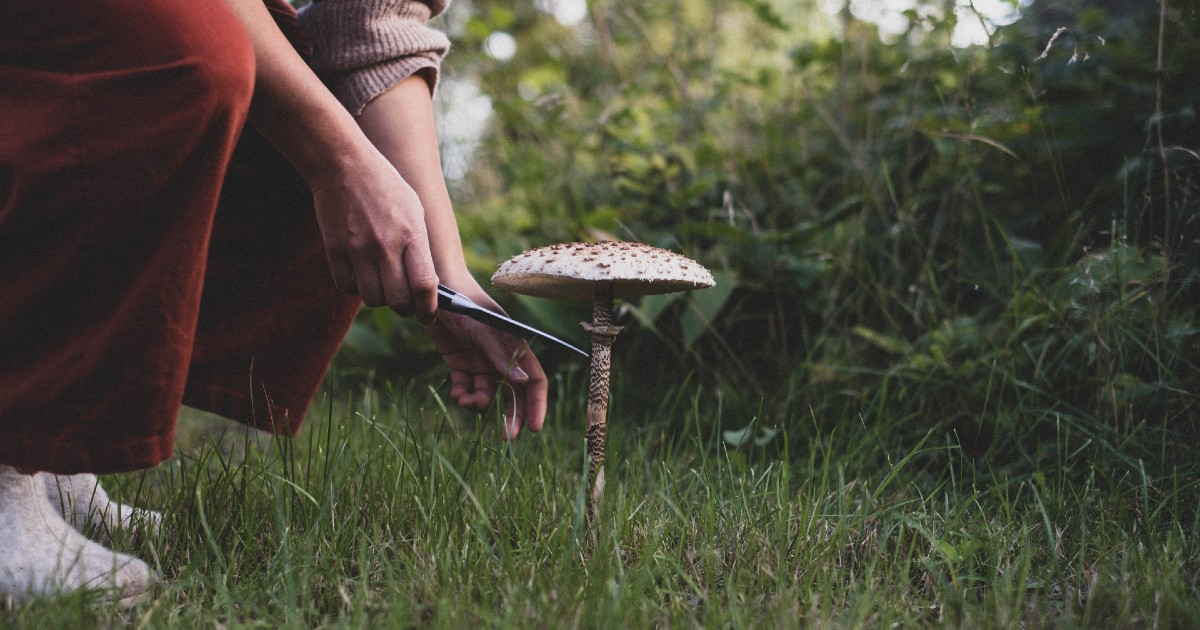
    I have a puppy that needs to go on a daily walk. Since I am out every day, I have discovered the amazing amount of edible plants that grow in the Swedish countryside. Not only is it really fun to pick wild plants for eating, it is also very tasty and healthy! So if you love nature walks, I would highly recommend studying edible wild plants, such as berries, herbs, mushrooms, leaves and flowers. Some of my favorites are wild pea (gökärt), sorrel (ängssyra), lingonberries, pine sprouts (granskott), ramson (ramslök), parasol mushroom (stolt fjällskivling), lilac (syren) and dandelion (maskros).
  • Grow your own!
    For those of you who love to also work with plants, you can grow your own food! Why only grow decorative plants? There are so many plants that are both beautiful and edible. Only have a window to grow in? Then go for sprouts and herbs. Especially sprouts of mung beans, lentils, and yellow peas are east to grow. If you have a garden, the sky is the limit (and the climate ;)). Lazy gardener? Go for berry bushes, fruit trees, rhubarb and edible weeds. These take care of themselves.
  • And… last but not least: Be kind and patient.
    It’s not easy to change eating habits! It takes time to find new ways, discover what works for you. And sometimes that frozen pizza is the best option for you that day. Don’t be discouraged when you don’t get it right every time. You’re on a journey, enjoy the ride!

Recipe – easy, tasty and healthy 

The recipe of the month is one of my favorite and easiest recipes to go to:
Creamy tomato soup with lemongrass and lime leaves! So easy and yet so tasty, as well as delicious. Guaranteed within 30 minutes on the table!

Mundekullas Gröna Kök – want to buy Stephanie's book?

Mundekullas Gröna Kök won the Gourmand Cookbook Awards 2021 for Best Vegetarian Cookbook in Sweden and Best Hotel Cookbook in the World. The book features more than 70 vegan and vegetarian recipes and 10 chapters on playing with flavors and textures, how to design and plant-based meal or buffet, the love for cooking farm-to-table. Buy the book here.

Read more: Inspiration & recipes from Stephanie Verstift

Videos for creativity and healthy living

Yogobe Video: 97se Yogobe Video: z47a Yogobe Video: dh52 Yogobe Video: 4c9t

To watch a full video you need to be logged in as a paying Yogobe member. Haven't tried Yogobe before? Try it for free during 14 days – get started here!

Mundekulla retreat center

Mundekulla is an ecological course and retreat center in the Småland countryside. At Mundekulla, people meet for courses, conferences and festivals, focusing on personal development, mindfulness, creativity, nature and of course beautiful nutritious food! Since its start over 20 years ago, the center has been built on sustainable principles. With traditional building methods and green energy, as well as with a focus on social justice and promoting various peace projects. The whole idea with Mundekulla is to create and co-create learning, art, music, community and health. The best thing is all the wonderful, meaningful encounters with other people. That's the core. Find out more at mundekulla.se

Photographer: Sara Vitale

Öppna inlägget

Sok

Kategorier